Structured cabling forms the backbone of every modern IT infrastructure. From enterprise offices and data centers to manufacturing units and commercial buildings, network performance depends heavily on how well the cabling system is designed and installed. Despite this importance, many organizations continue to make avoidable structured cabling mistakes that lead to downtime, poor performance and costly upgrades. This blog highlights the most common structured cabling mistakes and explains how businesses can future proof their network with the right approach.
Mistake One Ignoring Future Network Growth
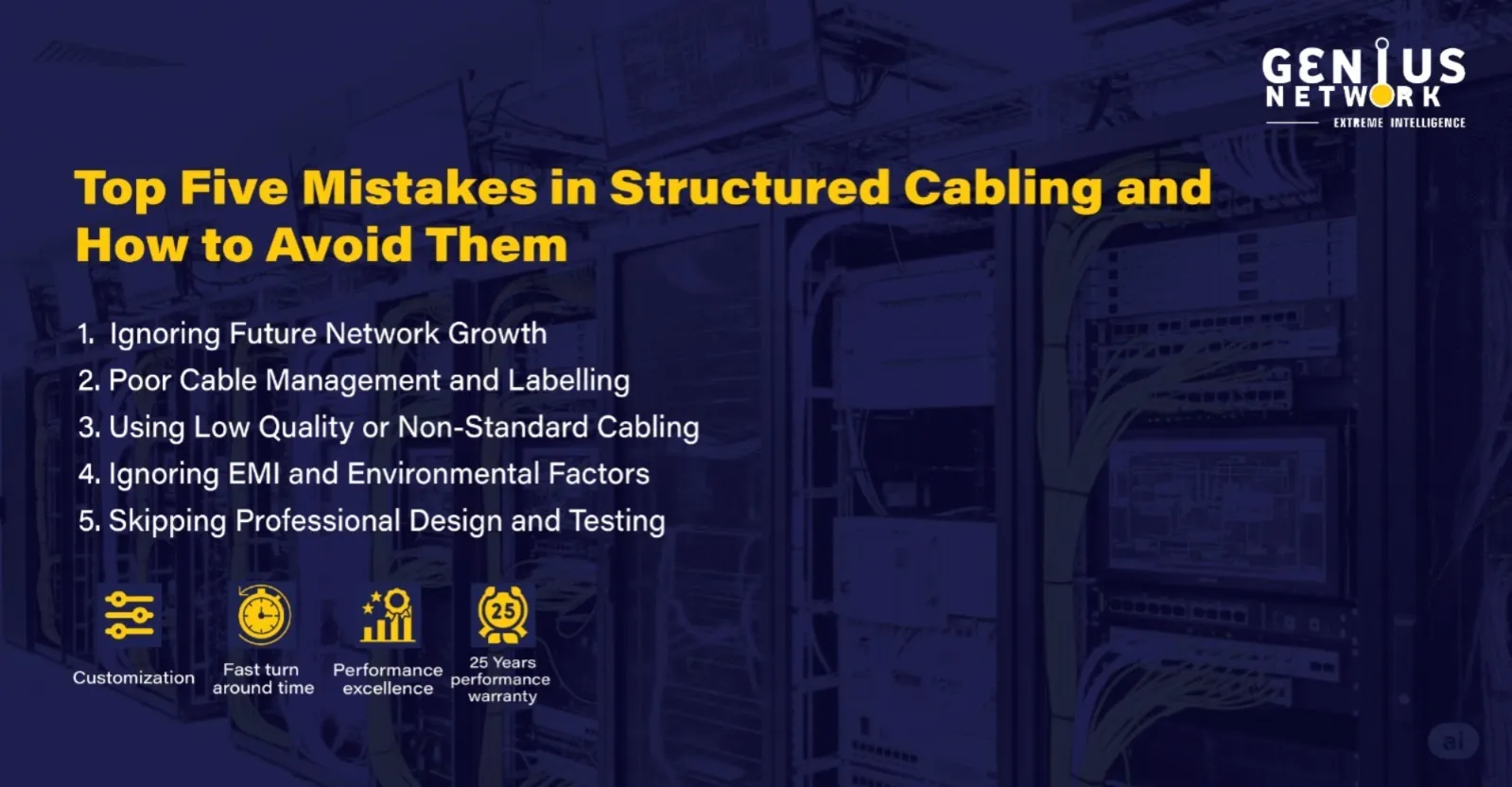
One of the biggest structured cabling mistakes is designing the network only for current requirements. Many IT teams and system integrators focus on present bandwidth needs without considering future expansion. As businesses adopt cloud computing, IoT devices, smart surveillance and higher speed applications, networks quickly become outdated. Planning structured cabling with scalability in mind ensures smoother upgrades, reduced rework and long term cost savings.
Mistake Two Poor Cable Management and Labeling
Unorganized racks, tangled cables and missing labels create major challenges for IT administrators. Poor cable management increases troubleshooting time, raises the risk of accidental disconnections and impacts airflow in network racks. Proper labeling and structured routing help IT teams identify issues faster and maintain consistent network performance. Well managed cabling also improves compliance and audit readiness in enterprise environments.
Mistake Three Using Low Quality or Non Standard Cabling
Choosing low quality cables to reduce initial costs often results in signal loss, interference and frequent failures. Structured cabling systems must meet industry standards to support reliable data transmission and long term performance. Using certified copper and fiber cabling solutions ensures better durability, improved bandwidth support and compatibility with active networking equipment.
Mistake Four Ignoring EMI and Environmental Factors
Industrial facilities, manufacturing plants and data centers often experience high electromagnetic interference. Using the wrong type of structured cabling in such environments can cause packet loss and unstable connectivity. Selecting shielded cables and proper grounding methods is critical for maintaining network stability in electrically noisy areas. Environmental factors like heat, moisture and dust should also be considered during cabling design.
Mistake Five Skipping Professional Design and Testing
Many network issues arise when structured cabling is installed without proper design planning and post installation testing. Certified testing validates performance, detects faults early and ensures the cabling system meets required standards. Engaging experienced structured cabling providers helps organizations avoid hidden issues that may impact operations later.
How to Future Proof Your Structured Cabling Network
Future ready structured cabling is built on quality materials, intelligent design and professional installation. Investing in scalable cabling infrastructure supports emerging technologies, higher data speeds and business growth. Partnering with trusted structured cabling solution providers like Genius Network helps organizations achieve reliable, efficient and standards compliant network infrastructure.
By avoiding these common structured cabling mistakes, businesses can reduce downtime, improve operational efficiency and ensure their IT infrastructure is ready for tomorrow’s demands.