Is Copper Still Relevant in High Speed Enterprise and Industrial LANs
Introduction
As 10 Gigabit Ethernet expands across enterprise campuses, data centers, and industrial automation networks, the comparison between copper cabling and fiber optic cabling continues to grow. While fiber is widely used for long distance and backbone connectivity, advanced copper cabling technologies, particularly Category 6A, remain a critical foundation for 10G Ethernet at the access layer.
This blog highlights the technical viability, performance characteristics, and future relevance of copper cabling in modern 10G networks based on industry standards and real world deployment scenarios.
Evolution of Copper Cabling for 10G Ethernet
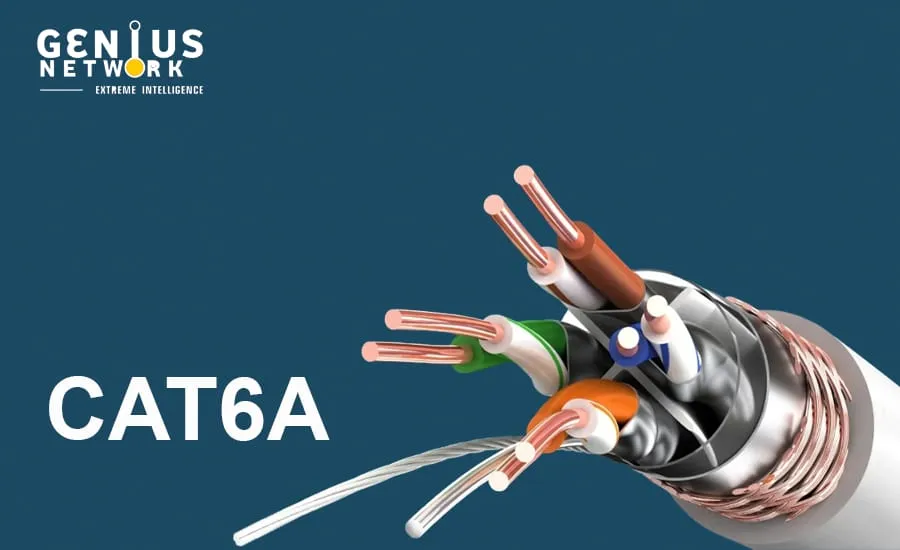
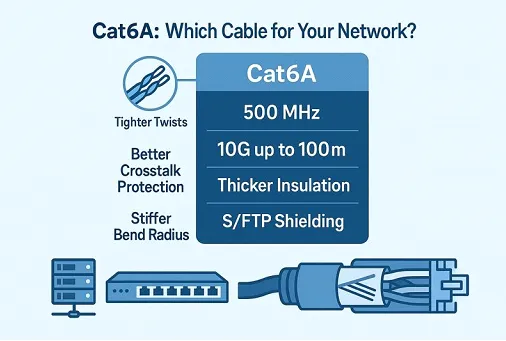
The IEEE 802.3an standard enables 10 Gigabit Ethernet over balanced twisted pair copper cabling up to 100 meters. Category 6A cabling is designed for structured cabling systems and engineered to maintain signal integrity under high bandwidth and high density conditions.Modern copper cabling systems are tested against stringent electrical parameters including near end crosstalk, alien crosstalk, return loss, insertion loss, and power sum performance to ensure stable and interference free 10G transmission.
Copper vs Fiber in 10G Networks
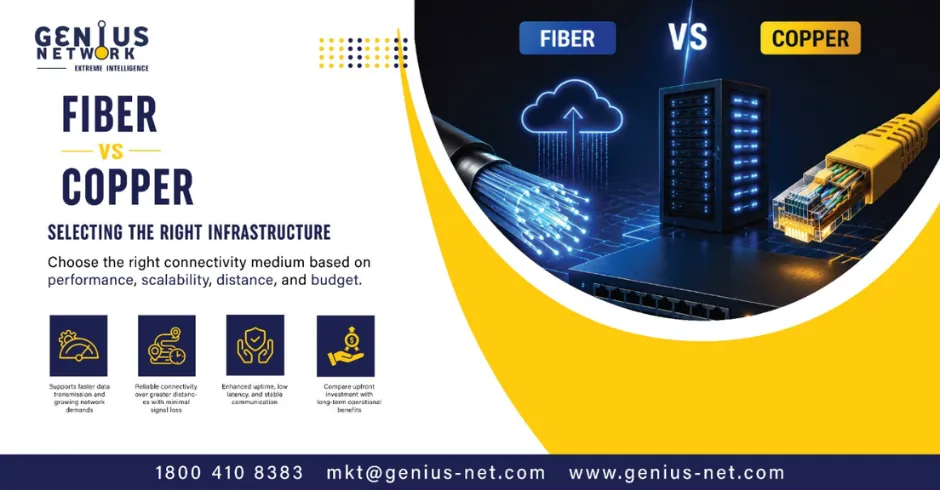
Copper cabling supports 10 Gbps transmission up to 100 meters and provides full Power over Ethernet capability, including high power delivery under IEEE 802.3bt. Fiber supports longer distances and lower latency but does not deliver power and requires additional active components.Copper remains the preferred choice where data and power convergence, cost efficiency, and operational simplicity are required, particularly in enterprise access networks.
Why Copper Continues to Power 10G Networks
Copper cabling is essential for powering Wi Fi 6 access points, IP surveillance systems, access control devices, building management systems, and industrial IoT equipment. Native RJ45 connectivity allows backward compatibility, faster deployment, easier maintenance, and reduced mean time to repair.
For network links within 100 meters, copper offers lower total cost of ownership compared to fiber due to simplified installation and reduced dependence on optical transceivers.
Copper Cabling in Industrial Environments
In industrial and harsh environments, shielded copper cabling delivers reliable performance in high EMI conditions such as manufacturing plants and warehouses. Its mechanical strength and stable termination make it suitable for environments where fiber cables are more susceptible to physical stress and connector contamination.
Standards Compliance and Future Readiness
Advanced copper cabling systems comply with ISO IEC 11801, TIA 568.2 D, IEEE 802.3an, and IEEE 802.3bt standards. Properly designed Category 6A infrastructure remains future ready, supporting 10G Ethernet, multi gig speeds, and high power PoE applications.
Future Outlook
The future of network infrastructure is hybrid. Fiber serves backbone and long distance connectivity, while copper continues to power access layer networks where speed, power delivery, and reliability are critical. Copper cabling is not being replaced but refined to meet the demands of next generation enterprise and industrial networks.