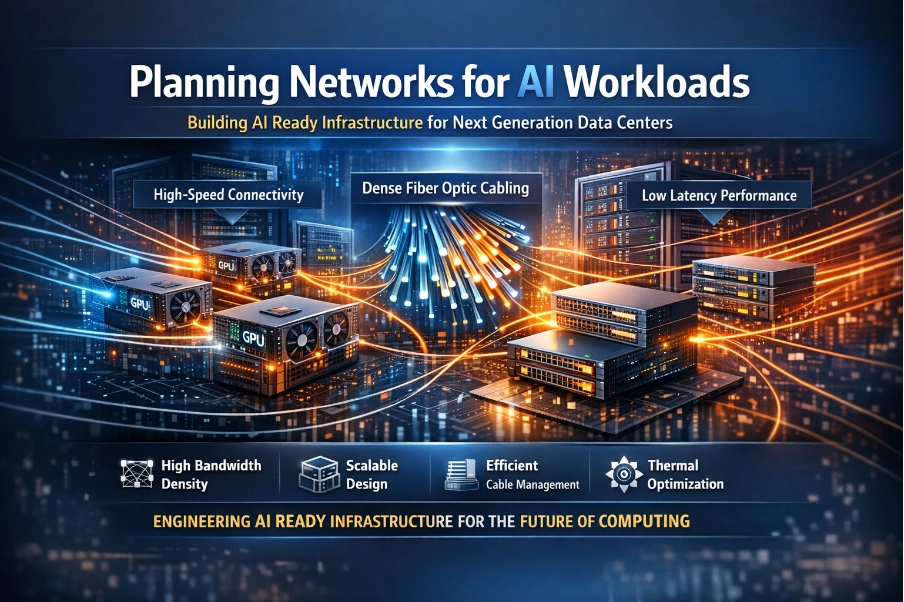
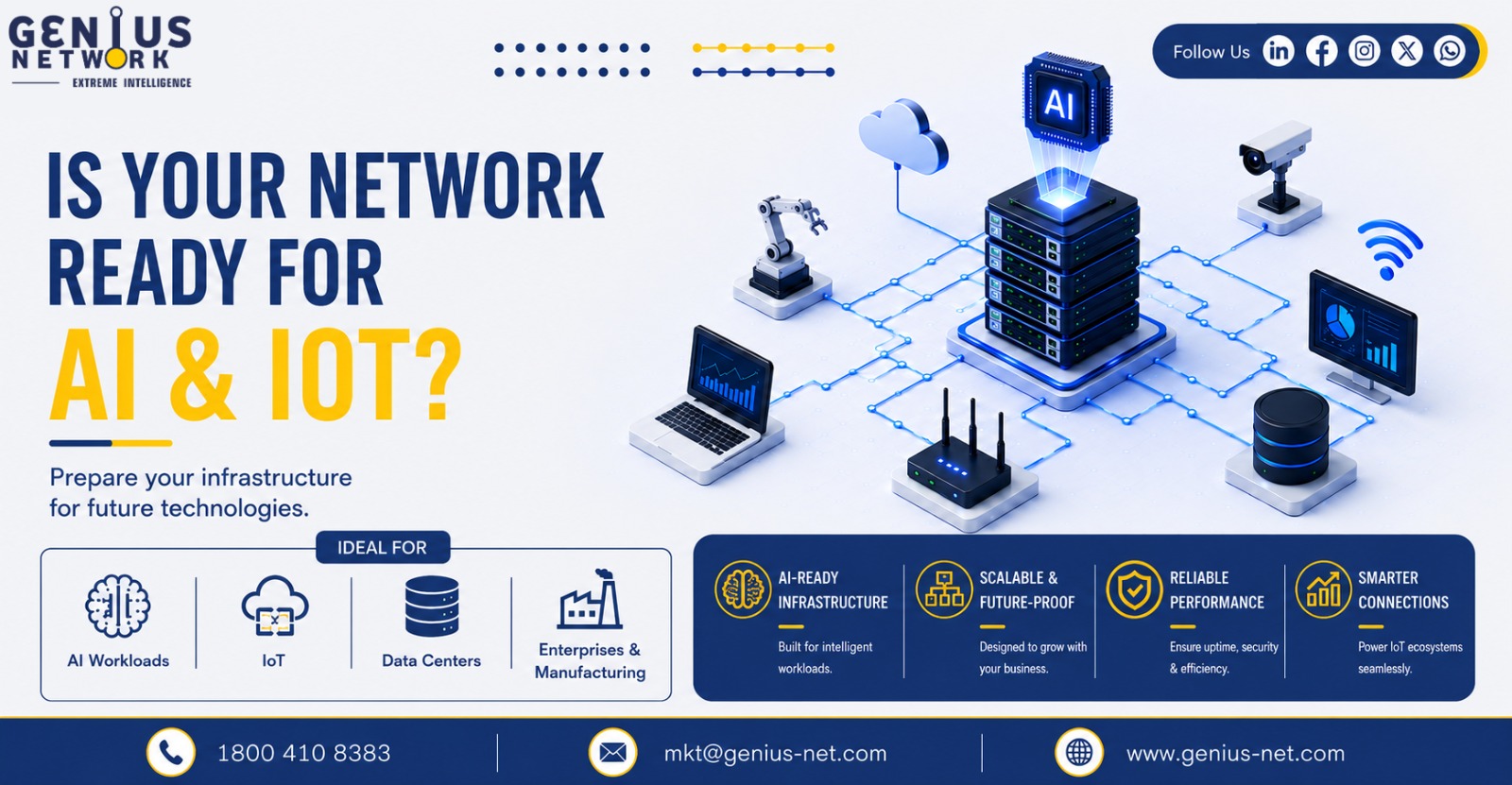
Artificial Intelligence is rapidly transforming enterprise IT architecture. From large language models and predictive analytics to computer vision and real time automation, AI workloads demand a fundamentally different approach to network design. Traditional data center networks built for north south traffic patterns are no longer sufficient. AI driven environments generate massive east west data flows between GPU clusters, storage arrays, and high performance compute nodes. Planning networks for AI workloads requires a strategic focus on bandwidth density, low latency performance, structured cabling architecture, and scalable data center design.
AI data flow visualization clearly demonstrates the shift in traffic behavior. Instead of simple client to server communication, AI training and inference environments rely on continuous data exchange across distributed computing resources. High throughput connectivity between GPU servers, AI accelerators, NVMe storage, and leaf spine network fabrics becomes critical. Any bottleneck in physical layer infrastructure can directly impact model training time, computational efficiency, and overall return on investment.
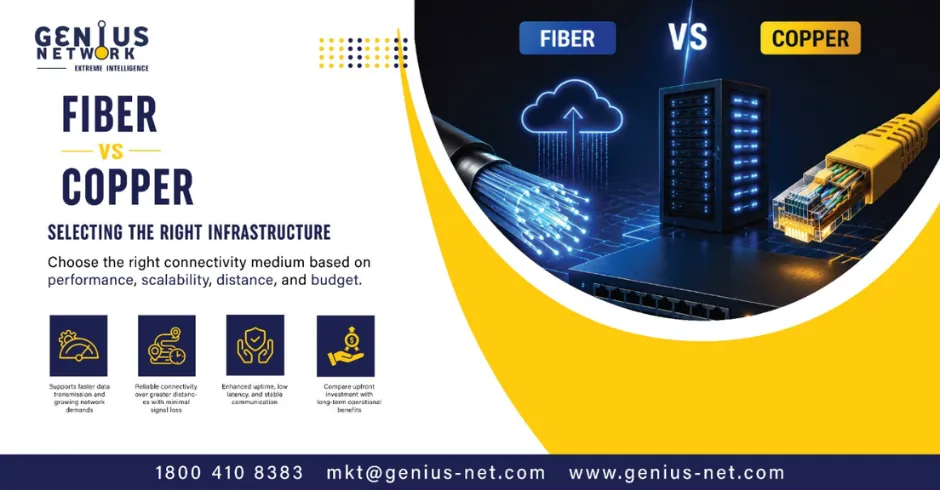
Cabling considerations play a foundational role in enabling AI ready infrastructure. High density fiber optic cabling, structured cabling systems, and optimized patching architecture must support 40G, 100G, 400G, and emerging 800G Ethernet deployments. Precision engineered fiber management ensures minimal signal loss, improved airflow management, and simplified scalability. Proper cable routing strategies reduce latency variability and maintain consistent performance across high performance computing clusters.
For data center architects and network consultants, selecting the right physical layer design is essential. Spine leaf topologies require structured fiber backbone planning with sufficient headroom for future expansion. Modular cabling systems provide flexibility for rapid AI cluster scaling without disruptive redesign. Advanced cable management solutions also enhance cooling efficiency by maintaining unobstructed airflow pathways within racks and containment systems.
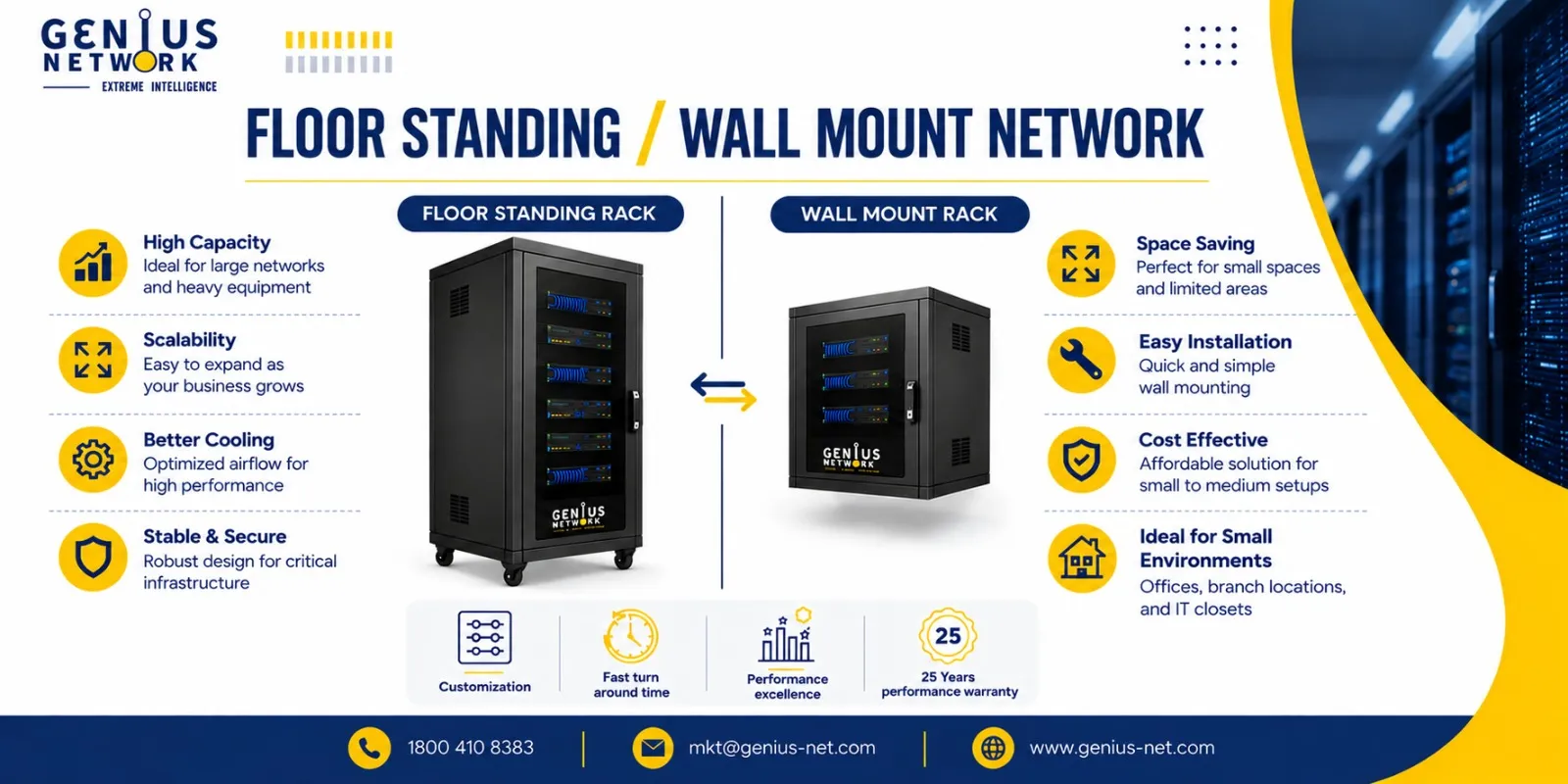
Power and thermal dynamics further influence network planning for AI workloads. AI servers with GPU acceleration generate significant heat loads, making airflow optimization and structured rack design critical components of infrastructure reliability. Integrated rack level cable organization, high density patch panels, and efficient containment strategies support both performance and energy efficiency goals. Optimized physical infrastructure directly contributes to improved power usage effectiveness and operational sustainability.
Enterprise organizations adopting AI driven data centers must also consider network resilience and redundancy. Redundant fiber paths, diversified routing, and intelligent infrastructure planning reduce the risk of downtime in mission critical AI applications. Whether supporting financial analytics, manufacturing automation, healthcare imaging, or large scale data modeling, uninterrupted connectivity is non negotiable.
Security is another dimension of AI network planning. Structured cabling architecture should support secure segmentation, controlled access environments, and compliance aligned infrastructure frameworks. Physical layer reliability forms the base for secure digital transformation initiatives.
At Genius Network, we understand that AI infrastructure demands precision engineering from the ground up. Our structured cabling solutions are designed to support high bandwidth applications, hyperscale data center deployments, and enterprise AI environments. With a focus on signal integrity, scalability, and long term durability, our solutions empower organizations to build AI ready networks that evolve with technological advancement.
As AI adoption accelerates across industries, forward looking infrastructure planning becomes a competitive differentiator. Investing in optimized data center design, high performance fiber optic cabling, and structured network architecture ensures that enterprises are prepared for future computational demands. The physical layer is not just a support function. It is the backbone of AI innovation.